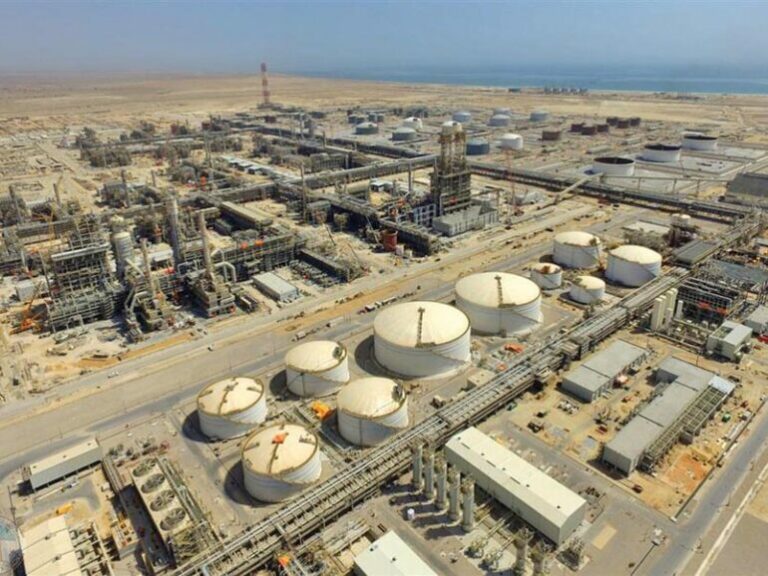
The expansion of Western Desert Gas Complex (WDGC) is located in El-Amreya, Alexandria, Egypt. Once operational, the new Train D will increase WDGC’s production capacity to 1.5 bcfd, up from the current 950 MMcfd, with a capacity of 600 MMcfd. This expansion will not only boost the supply of ethane-propane mixture for Egyptian petrochemical producers but also increase WDGC’s production of LPG and condensates for the local market.
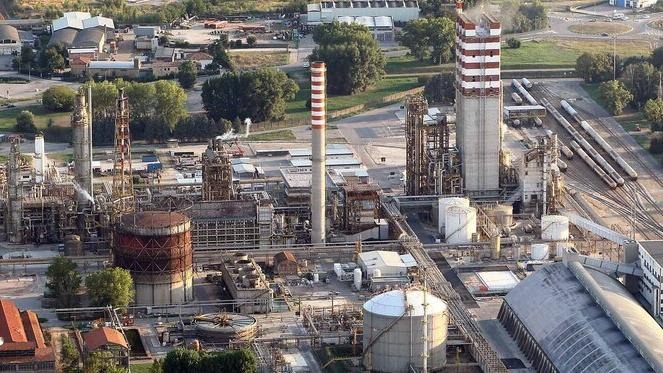
The production of renewable products began at the Rotterdam refinery in the Netherlands in 2011, marking a significant milestone in sustainability efforts. With Neste’s current capacity for renewable products standing at 1.4 million tons in Rotterdam, it currently holds the title for the largest such capacity in Europe.
To further bolster its commitment to renewable energy, Neste is undertaking a substantial investment of approximately EUR 1.9 billion for the expansion of the Rotterdam refinery. This expansion project aims to increase overall renewable product capacity by 1.3 million tons per annum. Consequently, the total renewable product capacity in Rotterdam will soar to 2.7 million tons annually, with sustainable aviation fuel (SAF) production capability accounting for 1.2 million tons. The target timeline for starting up the new production unit is set for 2026.
The project involves fitting scrubbers onto container ships totaling a capacity of 8.09 million TEU. This initiative aims to comply with a new regulation enforced by the International Maritime Organization (IMO) since January 1st, 2020, which mandates an 85% reduction in sulfur emissions from shipping companies. The goal is to mitigate the sector’s environmental impact and enhance air quality. Scrubbers offer an effective solution for controlling emissions from large vessels by filtering exhaust gases produced during fuel combustion, thereby reducing pollution.